The Bench
Pre-Owned Swiss Watches: What Buyers Check First
A practical guide to pre-owned Swiss watches: how the market works, how to check a reference, movement and serial, and how to store a mechanical watch.
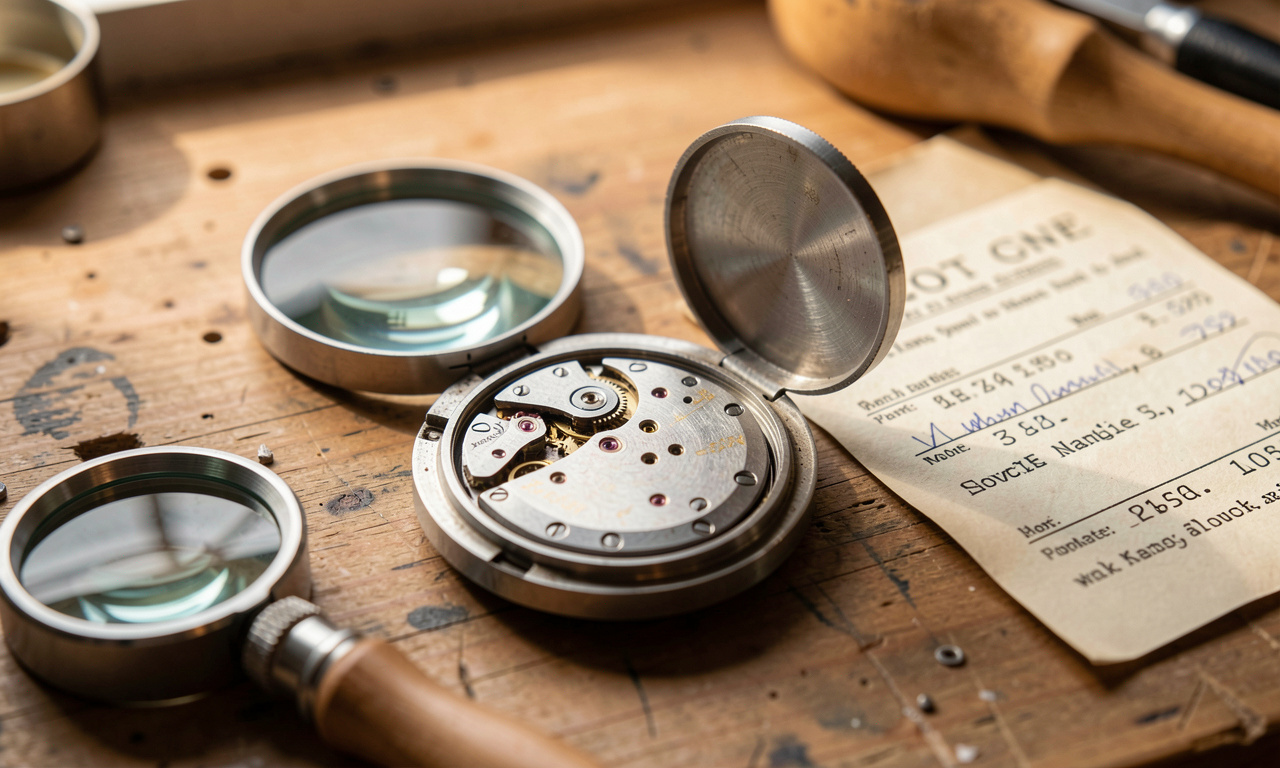
A pre-owned Swiss watch is priced by four things: the trade that moved it, the documents that describe it, the house that made it, and the way it was kept. Buyers who check those four points before they talk about money rarely get surprised. The photographs matter less than the words in the listing, and the words matter less than the reference number.
How the pre-owned Swiss watch market works
The pre-owned market is not one market. Stock moves through several hands before it reaches a private buyer. Dealers buy from estates, from auctions and from other dealers. Auction houses sell to the trade and to the public on the same day. Private sellers list on forums and classified pages, often with no history at all.
Each route leaves a different paper trail. A watch that passed through an auction has a catalogue entry and a result. A watch sold privately may have nothing but a message thread. That difference is why the same reference can carry two very different prices in the same month.
The listing text carries the weight. A seller who writes the reference number, the case size, the movement calibre and the service history is describing a watch. A seller who writes only a brand name and a year is describing a hope. Buyers who read the trade itself, rather than only the watch, tend to ask better questions. The market section of The Unworn Ledger covers how stock moves from dealers and auctions to private sellers, and why the words on a listing carry more weight than the photographs do.
What does a reference number actually prove?
A reference number identifies a model family and a production period. It does not prove that the watch in the photograph is that watch. The number is stamped or engraved on the case, and it can be read, copied and reused.
Checking a reference is a comparison exercise. The buyer collects the case number, the movement number and the dial details, then compares them with published records for that reference. A mismatch between the case and the movement is a fact. What it means depends on the house and the era.
Reference guides exist for this reason. They show how each check is done and, just as important, what each check cannot settle. A correct reference number does not confirm a correct dial. A correct dial does not confirm a correct bracelet. Each check closes one question and opens another.
How to check a watch reference, movement and serial number
Start with the case. Read the reference and the serial from the case back or between the lugs, depending on the model. Note the exact characters, including any letter prefix.
Then read the movement. On a watch with a display back this takes a minute. On a closed case it requires a watchmaker, and that step should be agreed with the seller before money changes hands.
Then read the service record. A service paper names a date, a workshop and often a list of replaced parts. A replaced dial or hands changes the value of a vintage piece, and the paper is where that shows up.
Finally, compare all three. The reference, the movement number and the service record should describe one watch. When they do not, the buyer has a question to ask rather than a conclusion to draw.
Which brands dominate the used market?
A small group of houses accounts for most of the trade. Rolex, Omega, Cartier, Patek Philippe, Audemars Piguet, Jaeger-LeCoultre and Tudor appear in listings far more often than the rest. Volume matters because it produces comparison prices. A buyer who can find twenty recent sales of the same reference has a real market. A buyer who can find two has an anecdote.
Each name also carries a different meaning on the used market. Some houses hold value through design changes that buyers can date. Others hold value through movement reputation. Others depend on a single model line. A brand directory that collects the families trading most often, and says what each name stands for, saves a buyer weeks of reading.
Why the Rolex Datejust is a dating exercise
The Rolex Datejust is one of the most traded references in the world, and its case and bracelet changed at least five times since 1945. Those changes are the fastest way to place an example in time before anyone quotes a price for it.
A buyer who can identify the case shape, the bezel type, the bracelet style and the dial configuration can narrow a Datejust to a short window of years. That window then sets the price range. Without it, the buyer is negotiating blind against a seller who may know more.
The same logic applies to other long-running lines. Long production means many versions, and many versions mean many prices for what looks like one watch.
How should a mechanical watch be stored and wound?
A mechanical watch runs on a mainspring, and the mainspring needs movement. A watch left stopped for years can develop dried lubricants and stiff seals. A watch wound every few weeks keeps its oils distributed.
Storage matters as much as winding. Humidity damages dials and movements. A dry box or a ventilated drawer is better than a sealed safe in a damp room. Direct sunlight fades dials and straps.
Travel adds another set of risks. A watch worn on a plane is exposed to temperature changes and knocks. A watch packed in a case is exposed to pressure on the crown. Either way, the watch should be checked after the trip, not before the next one.
What a buyer should do before paying
Read the listing twice. Write down the reference, the serial, the movement and the service history. Compare them with published records. Ask for photographs of the case back, the movement and any papers. Ask when the watch was last serviced and by whom.
Then decide what the watch is worth to you, not what it is worth in general. The pre-owned market rewards patience and punishes speed. A buyer who understands the trade, the documents, the house and the ownership history has four independent checks. A buyer who understands only the brand has one, and it is the weakest of the four.