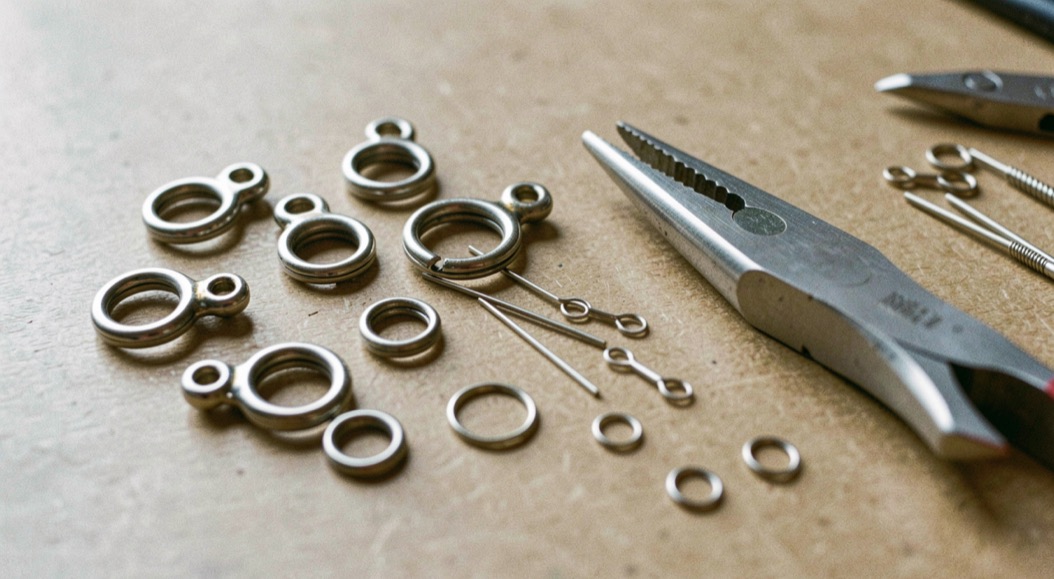
Make the next check visible
A useful guide to jewelry findings guide starts by asking what the label, shape, material, or tool changes in the project. The bench keeps match the hole, wire, crimp, jump ring, clasp, metal description, and finishing method as one junction. This turns a broad subject into a choice that can be checked with the materials in hand.
Cord ends and fold-over crimps assume the cord itself is understood. With leather and suede cord, the stated thickness and finish decide which junction hardware will hold, so the bench keeps that material on its own page.
Use a short sample to see the consequence before committing to a long repeat. Record the source, product family, date, and observed result separately so a personal test does not become a universal promise.
Bench checklist
Before you commit
- Name the exact family or operation behind jewelry findings guide.
- Keep the source and retrieval date beside any precise claim.
- Identify the dimension, finish, or junction that limits the project.
- Test the intended materials before committing to the full design.
Keep the caveat
What this page leaves visible
A familiar label can organize a question, but it cannot prove that two materials are interchangeable. Keep the publisher's caveat attached and leave unknowns visible.
Evidence pack
Sources close to the decision
- Beadalon: Learning Center FAQsProduct-specific questions about stringing wire, diameter, strand count, and crimp compatibility.The guidance is manufacturer-specific; confirm compatibility with the exact components in hand. Checked August 24, 2026.
- U.S. Federal Trade Commission: Jewelry GuidesWhy material type, treatment, size, quality, durability, origin, and other product representations should be truthful and clear.This is general U.S. guidance, not personalized legal advice or a substitute for the current regulation text. Checked August 24, 2026.