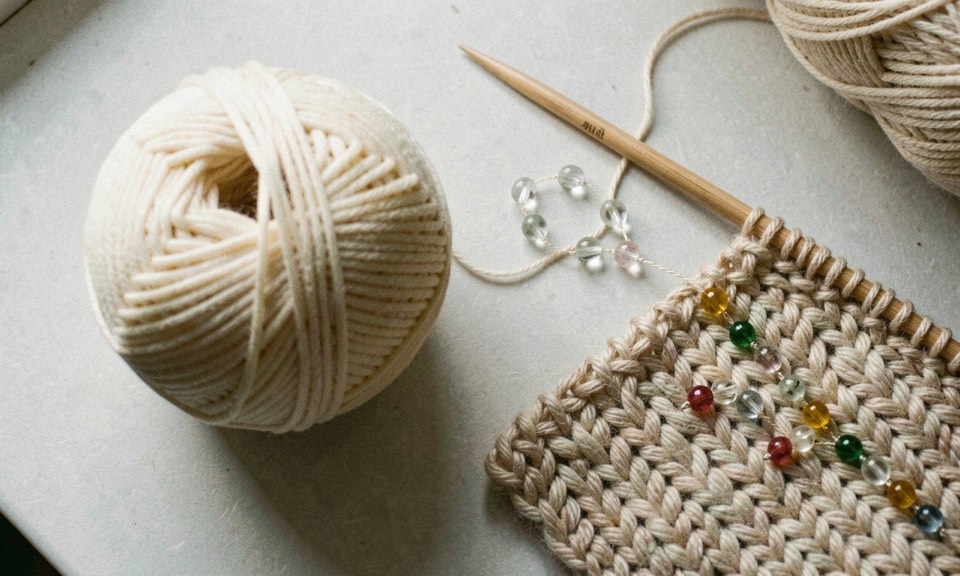
A batch record is the sheet you fill in for one making session: date, materials, counts, thread, tension, and what you noticed. You write the first lines before you pick up a needle, add to it while you work, and finish it with a short verdict once the piece is off the table. Read it the same way you would read notes on home brewing in England: as a log of conditions, not as a promise about the result.
What belongs in a batch record?
A batch record holds the facts that would be expensive to guess later. Keep it to one page per session, and use the same headings every time so your eye knows where to land.
Before the session:
- Date, start time, and where you are working (bench, class, kitchen table).
- Bead lot: size, colour name, supplier, and the number on the bag or tube. If you tipped beads into a tray, note the tray.
- Thread: brand, weight, colour, and whether it is new or partly used.
- Needle size and length.
- Pattern or reference: the page, chart, or sketch you are following, and its version if it has one.
- The goal for this session, in one line. "Finish the second repeat" is enough.
During the session:
- Counts. How many beads per repeat, how many repeats completed, how many rows.
- Tension notes. Loose, tight, or uneven, and where you noticed it.
- Any change you made and why. Swapped a needle, added a half hitch, skipped a bead because the hole was blocked.
- Time spent, roughly. Not for billing, just to see how long a repeat really takes.
After the session:
- What is finished and what is still open.
- The state of the piece: on the thread, off the thread, ends woven in or not.
- One or two lines on how it went. What you would repeat, what you would not.
Leave a margin. The margin is where the useful sentences end up, the ones you write when something surprises you.
When is the record written during a session?
The record is written at three moments, and each moment has a different job.
The first pass happens before you thread a needle. This is the setup pass: materials, counts, goal. It takes two minutes and it is the part people skip. Skipping it is why an old record often cannot answer the only question you have later, which is what exactly went into the piece.
The second pass happens during the work, in short bursts. Do not try to write a paragraph while you are mid-repeat. Write a mark, a number, a word. "Row 7, tight." "Bead lot B, slightly larger." "Thread frayed at 40 min." These marks are cheap and they are the ones that survive.
The third pass happens after you stop, while the piece is still in front of you. This is where you write the verdict and the state of the work. If you leave it until the next day, you will remember the shape of the session but not the details, and the details are what a record is for.
A practical habit: keep the record on the same tray as the work, not in a notebook across the room. If the record is out of reach, it does not get written.
How do you read an old record without repeating a mistake?
Read it in a fixed order, and read it before you start the next session, not after you have already made the first mistake.
Start with the materials line. Compare it to what is on your bench now. If the bead lot number is different, expect a different result, even if the colour name is the same. Bead lots vary in size and finish, and a half millimetre of hole diameter changes how a needle passes.
Then read the tension notes. Look for the words that repeat. If "tight" appears three times in one session, that is not a mood, it is a pattern, and the next session should start with a deliberate check on the first repeat.
Then read the changes. Every change in a record is a small experiment. Ask whether it was kept or abandoned. A change that was kept and not written into the pattern is a trap for the next attempt.
Then read the verdict. Treat it as a hypothesis, not a rule. "Worked better with a shorter needle" is a hypothesis you can test in ten minutes. "This thread is bad" is not useful unless the record says which thread, which batch, and what it did.
Finally, look for what is missing. A record that says nothing about the light, the time of day, or how tired you were is still useful, but it cannot explain a session that went badly for no visible reason. Add those lines next time.
A short template you can copy
Use the same six headings every session. The repetition is the point.
- Session: date, start, end, place.
- Materials: beads with lot numbers, thread, needle, pattern version.
- Goal: one line.
- Progress: counts, repeats, rows, time.
- Notes: tension, changes, problems, in short marks.
- Verdict: state of the piece, what to repeat, what to change.
If you keep the sheet in a ring binder, number the pages. If you keep it in a notebook, date every page. The only record that fails is the one you cannot find.
What to do when two records disagree
Two records that disagree are more useful than two that match. When they conflict, go back to the materials line first. Most disagreements between sessions are material disagreements in disguise: a different bead lot, a different thread weight, a needle that was swapped without a note.
If the materials match and the results still differ, look at the conditions. Room temperature, humidity, and how much time you had are all real variables in beadwork, especially with thread that stretches or beads that are coated. Write them down next time, even roughly.
If the records still disagree, run a small test. One repeat, both conditions, same day. Write the result in the margin of both pages. That is how a batch record turns from a diary into a working document.
Keeping the habit alive
The record does not need to be neat. It needs to be written at the three moments, kept with the work, and read before the next session. A page of short marks beats a page of good intentions. Start with the materials line today, and let the rest of the sheet fill itself in as you work.
Bench checklist
Before you commit
- Name the exact family or operation behind keeping a batch record.
- Keep the source and retrieval date beside any precise claim.
- Identify the dimension, finish, or junction that limits the project.
- Test the intended materials before committing to the full design.
Keep the caveat
What this page leaves visible
A familiar label can organize a question, but it cannot prove that two materials are interchangeable. Keep the publisher's caveat attached and leave unknowns visible.
Evidence pack
Sources close to the decision
- MIYUKI Co., Ltd.: Seed bead count and weight referenceA source lane for comparing approximate count and weight information.Counts can vary with manufacturing lots, shapes, and finishes; this is not a universal conversion table. Checked August 24, 2026.
- PRECIOSA ORNELA: DownloadsCurrent catalogs, product information cards, certificates, and resistance documents for PRECIOSA families.A certificate or test report has a stated scope and date; it must not be generalized to every color or product. Checked August 24, 2026.