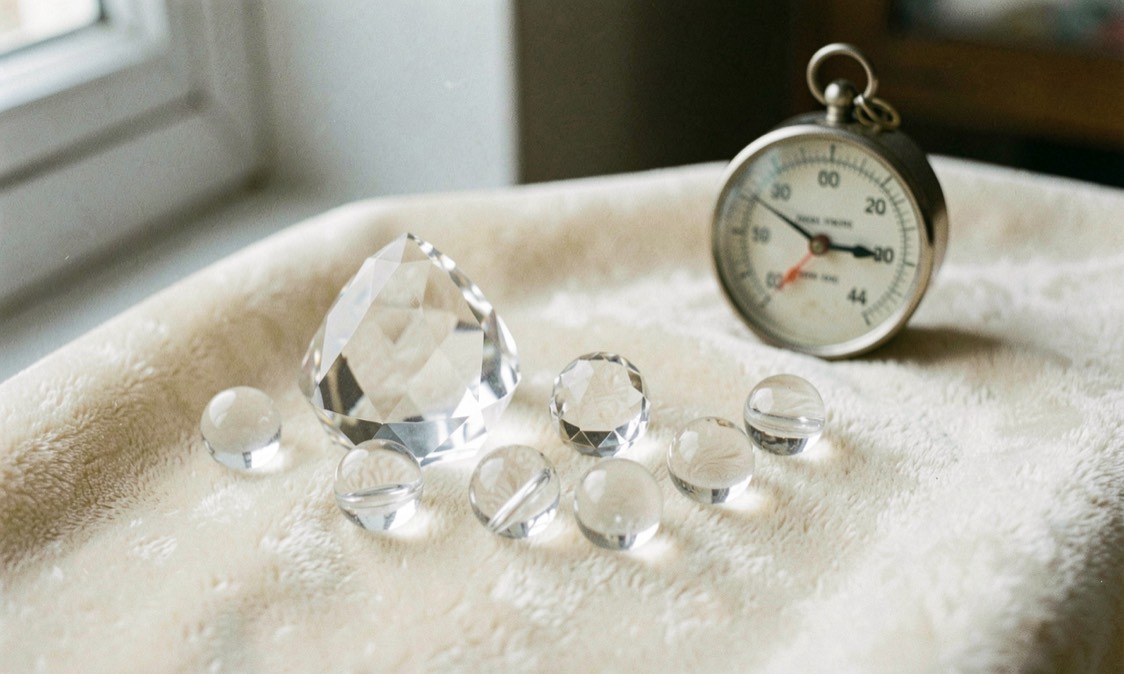
Why does a bead color change once it is on the strand?
Color is the least portable part of a bead record. Two beads sold under the same name can differ by lot, a dyed or lined finish can shade the thread around it, and a transparent bead takes part of its final color from the cord, the thread, or the skin beneath it. The bench treats those as fields to check rather than as surprises: transparency, finish, lot number, and the surface the strand will actually sit on.
A bead carries color differently from a photograph of a bead: a transparent glass bead borrows whatever sits beneath it, a lined bead keeps its color in the hole, and a matte surface scatters light where a polished one returns it. Painters work the same problem in another medium, and a watercolor magazine sets out how to lay a watercolor wash so that each transparent layer stays clean instead of turning muddy. A strand rewards that discipline: choose the few colors, fix the order, and let each neighbor do part of the work.
How many colors does a bead palette actually need?
Three or four colors plus one neutral will carry most counted work, and the variation comes from size, finish, and transparency rather than from more tubes. A transparent color over a dark cord reads deeper than the same bead over white thread, so the cord is part of the palette and belongs in the note.
A short materials list also decides whether a session can be shared. The bench keeps the room side of that decision in planning a bead project for a group or a family.
The practical route is to buy one tube of each candidate color, string a short sample over the cord planned for the piece, and look at it in the light the piece will be worn in. Keep the lot number and the source date with the sample, and extend the palette one color at a time once the first few hold together.
Bench checklist
Before you commit
- Name the transparency and the finish of a color before buying more than one tube.
- String a short sample over the cord, thread, or surface the piece will sit on.
- Keep one lot number per color and compare a new lot on a short strand before mixing it in.
- Hold the working palette to three or four colors plus a neutral and let size and finish carry the variation.
Keep the caveat
What this page leaves visible
A familiar label can organize a question, but it cannot prove that two materials are interchangeable. Keep the publisher's caveat attached and leave unknowns visible.
Evidence pack
Sources close to the decision
- MIYUKI Co., Ltd.: Delica Color and DurabilityThe A, B, C, D, and N caution meanings used in the finish guide.MIYUKI says the examination and manufacturing-history data are not absolute and can differ with use and environment. Checked August 24, 2026.
- PRECIOSA ORNELA: DownloadsCurrent catalogs, product information cards, certificates, and resistance documents for PRECIOSA families.A certificate or test report has a stated scope and date; it must not be generalized to every color or product. Checked August 24, 2026.
- U.S. Federal Trade Commission: Jewelry GuidesWhy material type, treatment, size, quality, durability, origin, and other product representations should be truthful and clear.This is general U.S. guidance, not personalized legal advice or a substitute for the current regulation text. Checked August 24, 2026.