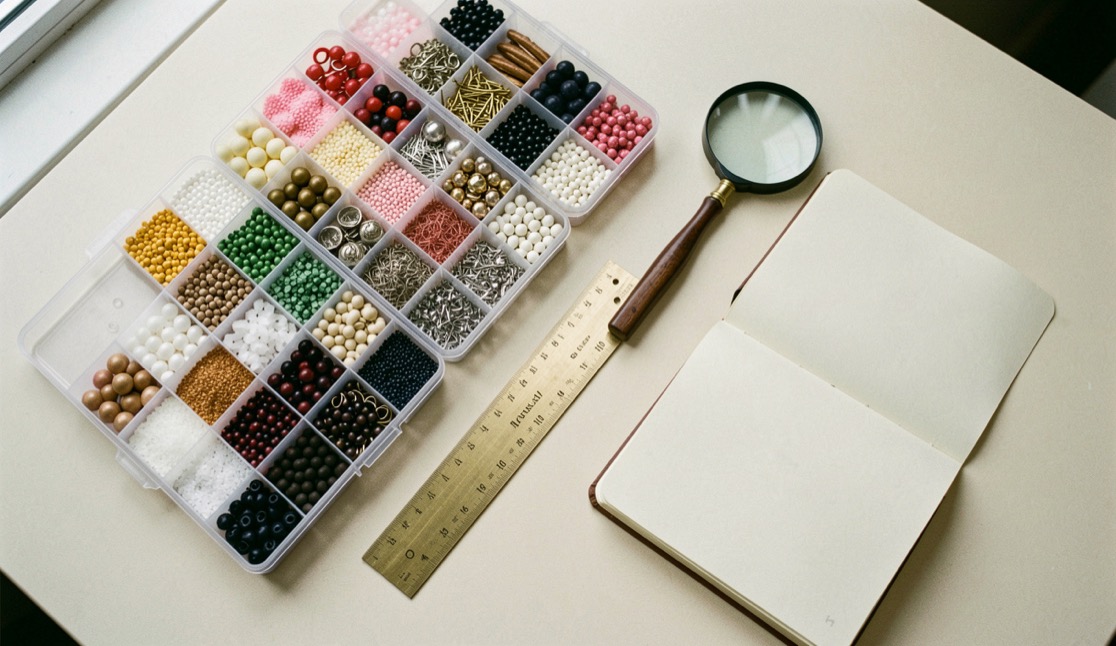
Choose & Compare
bead size chart by brand
Start with the exact record, then keep each maker, unit, source date, and caveat in its own row instead of blending a nominal label into a universal conversion.
Topic shelf
Material choices become clearer when source, caveat, and project consequence travel together.
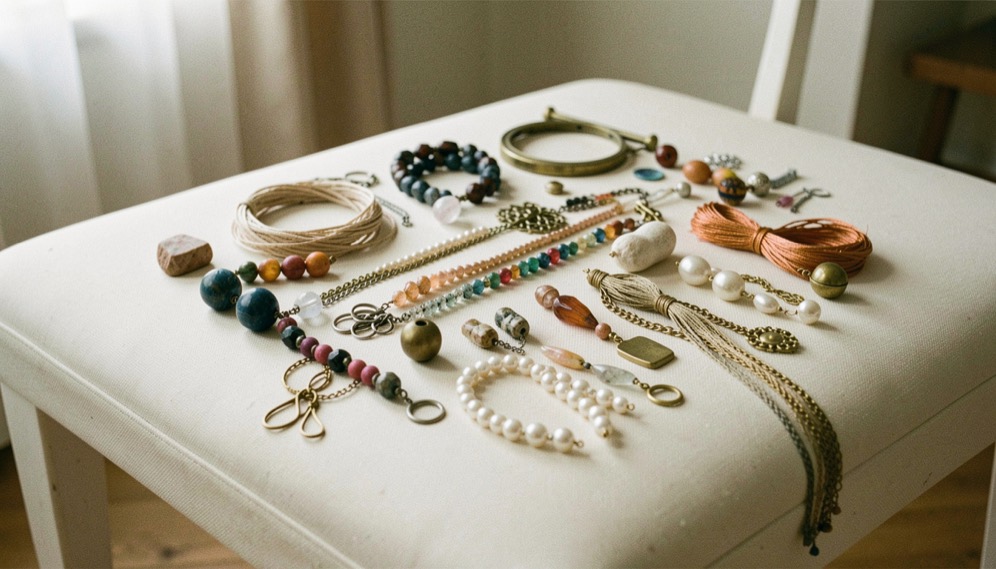
The Beadwork Reference topic gathers guides about labels, dimensions, finishes, shape vocabulary, tools, findings, buying, and care. Start with the decision that limits your project, then follow the source link beside the explanation.
The collection keeps manufacturer records separate and treats a small test swatch as useful evidence. It leaves room for uncertainty because a product page can be approximate, a finish can change with exposure, and a lot can differ from the last one.
Guides in this topic
Choose & Compare
Start with the exact record, then keep each maker, unit, source date, and caveat in its own row instead of blending a nominal label into a universal conversion.
Choose & Compare
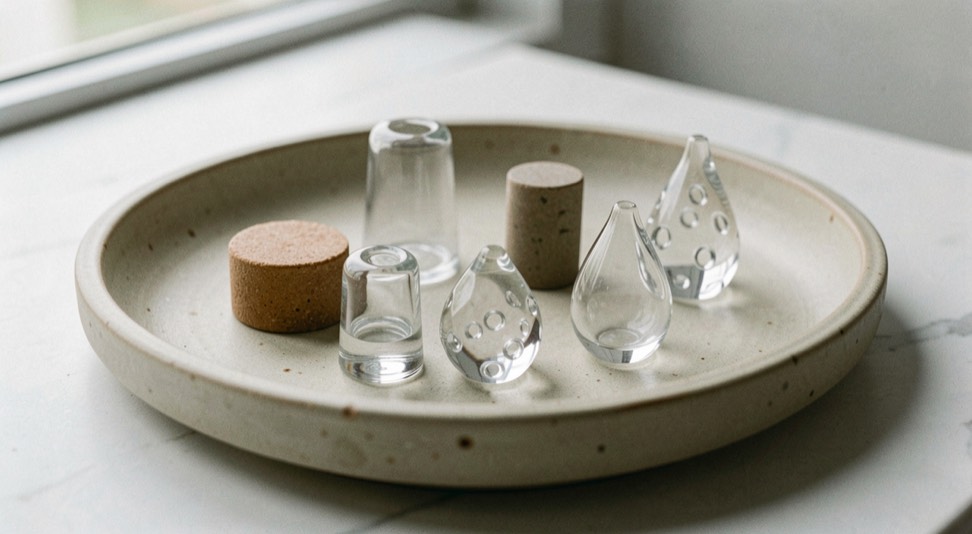
Start with the exact record, then sort by material, shape, manufacture, hole, finish, and likely project use before comparing color names.
Choose & Compare
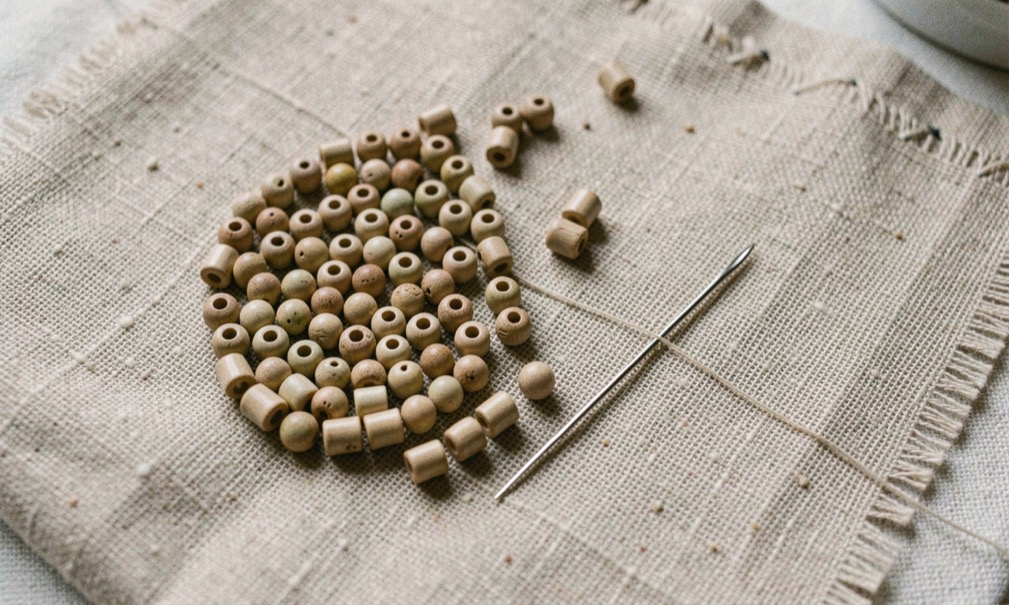
Start with the exact record, then read an aught label with the shape, hole profile, finish, and maker still attached.
Choose & Compare
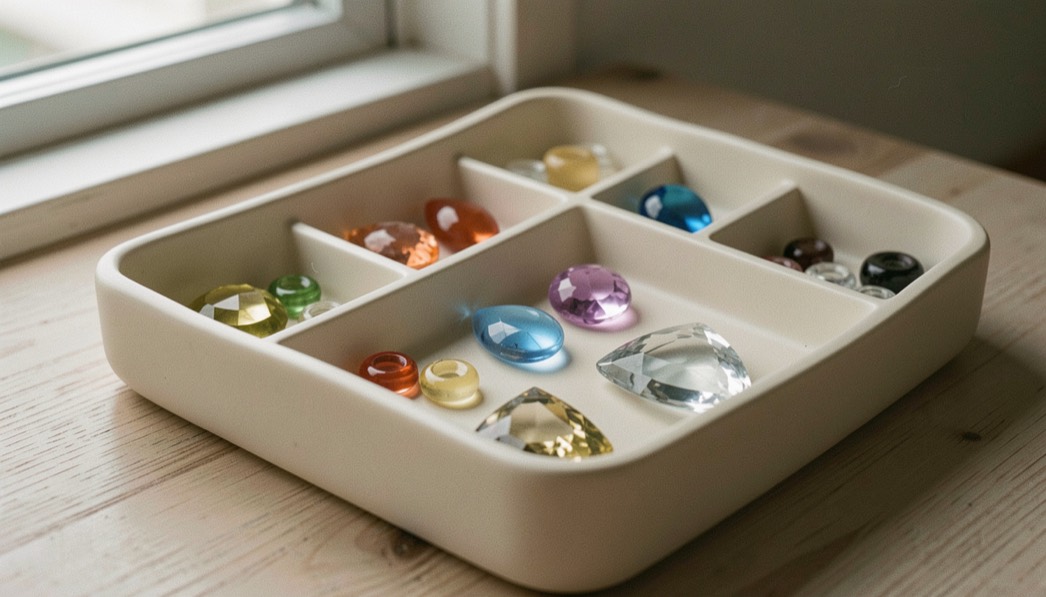
Start with the exact record, then use the exact PRECIOSA family and document scope rather than treating Czech as a complete specification.
Choose & Compare
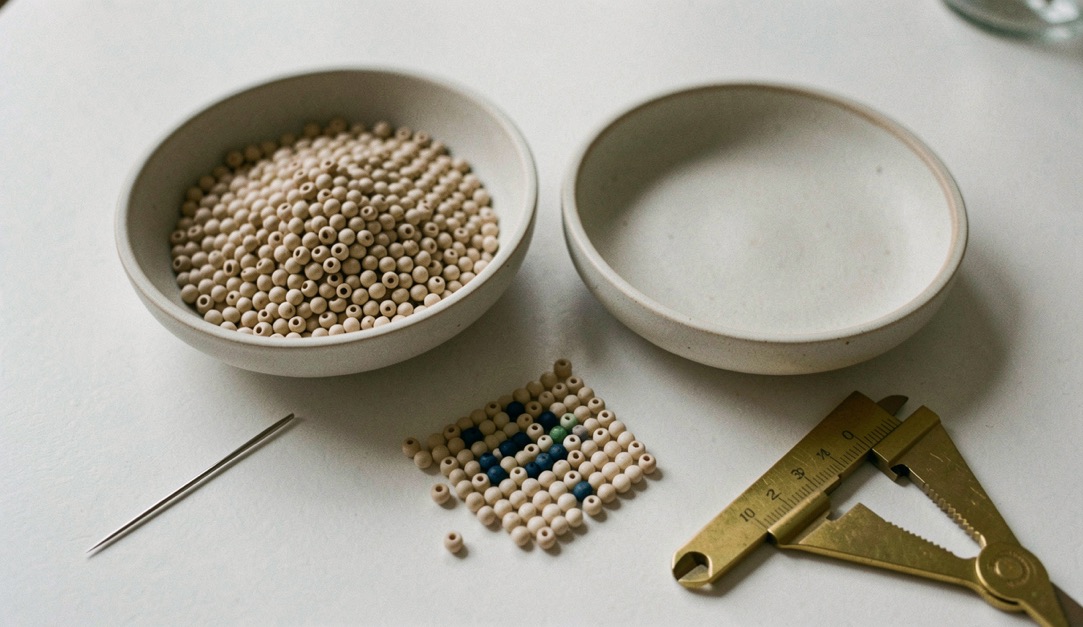
Start with the exact record, then compare separate manufacturer lanes and test the same stitch, thread, tension, and repeat before substituting.
Materials
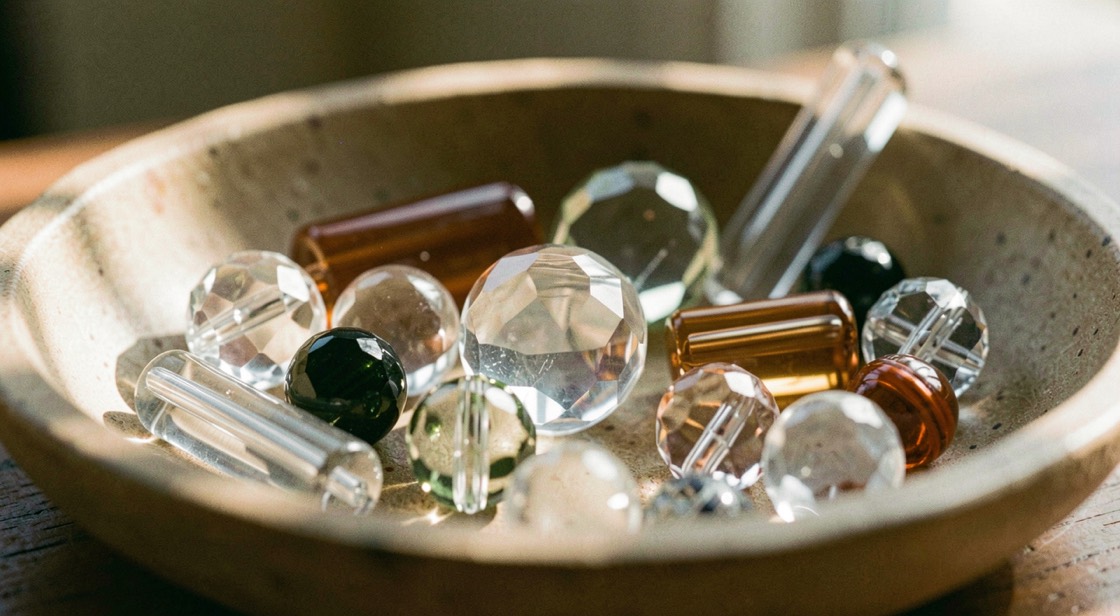
Start with the exact record, then let silhouette, edge, hole, and manufacture explain how a glass bead will sit and carry thread.
Materials
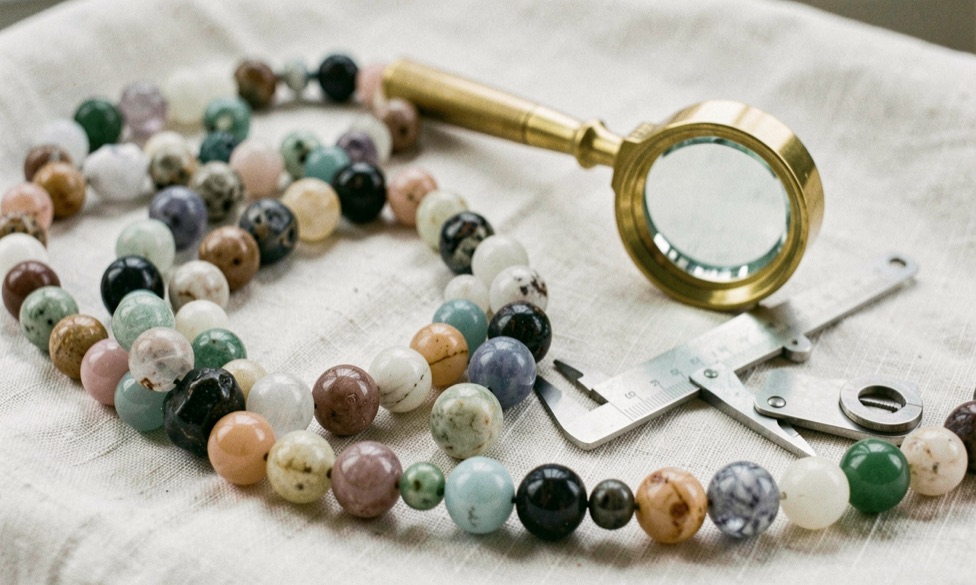
Start with the exact record, then separate mineral or trade name, treatment, imitation, disclosure, and the variation visible in the strand.
Materials
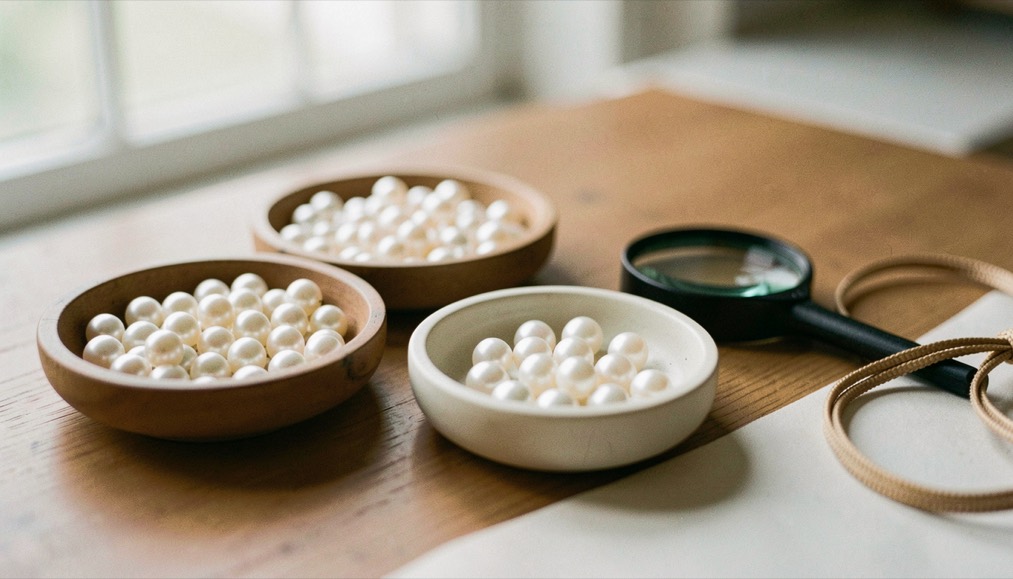
Start with the exact record, then keep natural, cultured, and imitation formation terms close to the material and care record.
Materials
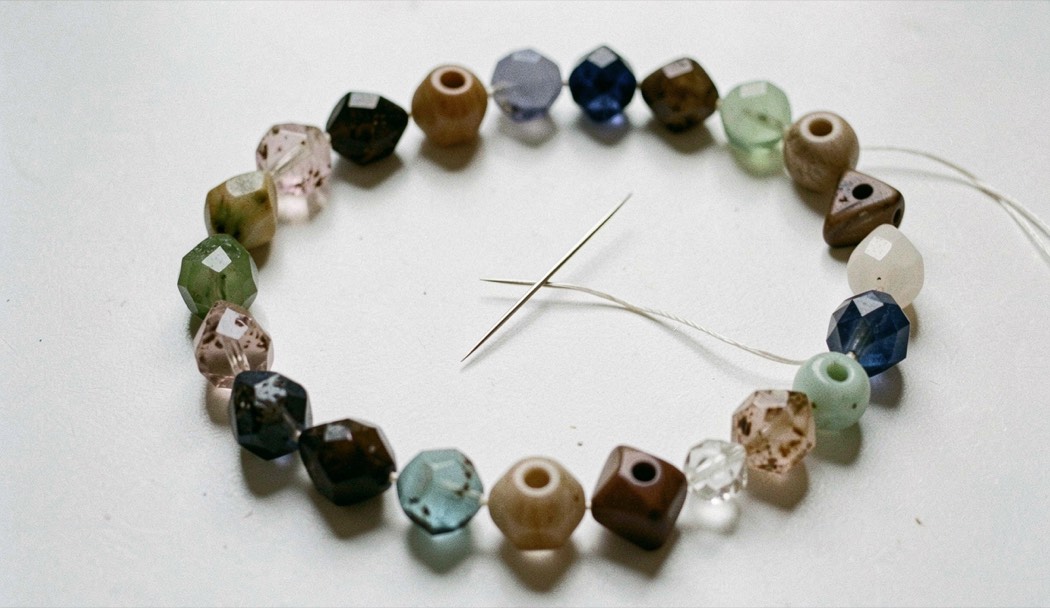
Start with the exact record, then treat orientation, hole position, cut edge, and neighboring contact as part of the shape.

Materials
Start with the exact record, then match catalogs, product cards, certificates, and resistance documents to the precise product scope.
Materials
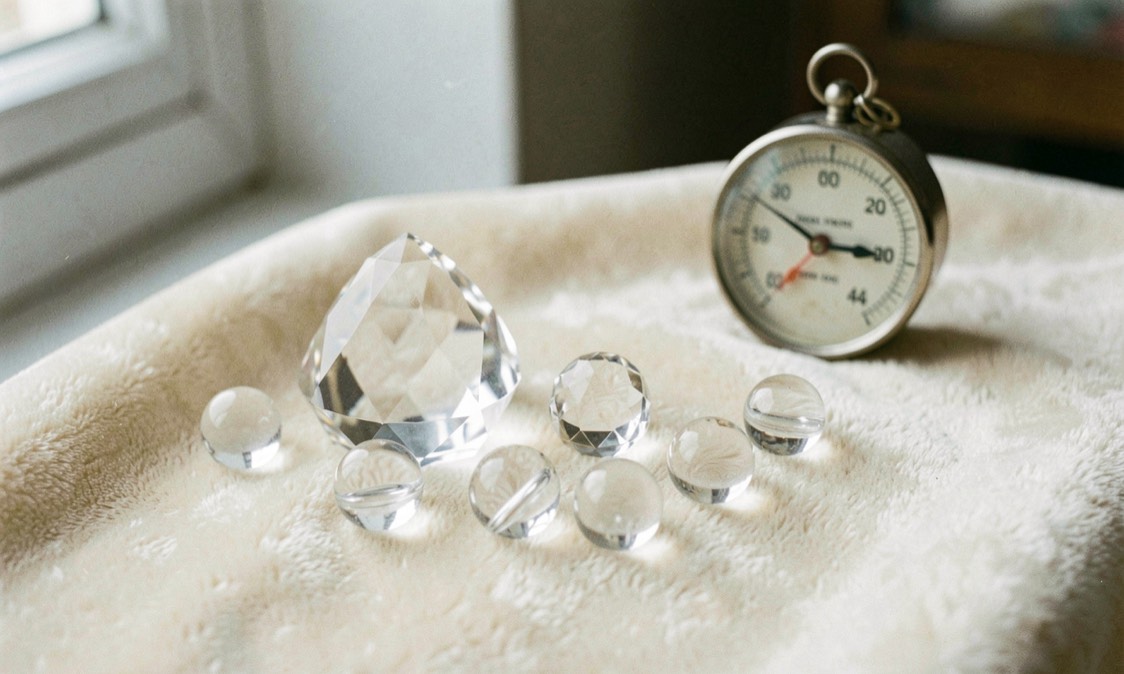
Start with the exact record, then describe a crystal component from its current product record, dimensions, finish, and document date.
Make
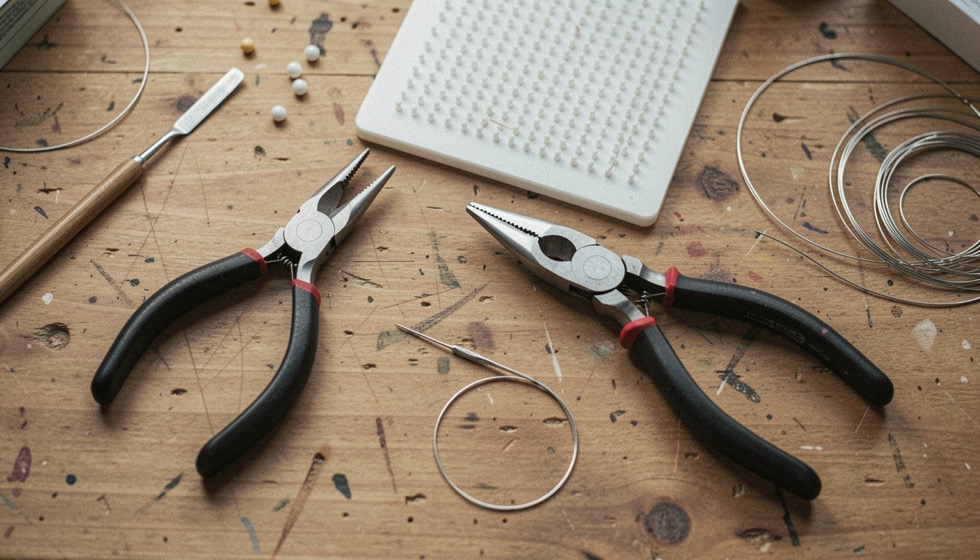
Start with the exact record, then choose tools by the operation, scale, wire or thread, and finding they will actually control.
Make
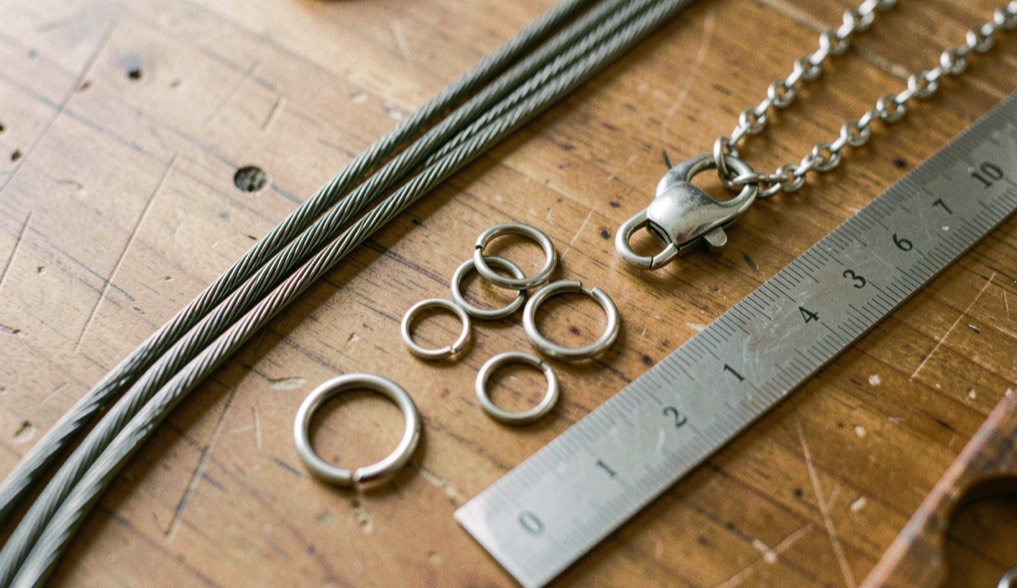
Start with the exact record, then compare link construction, wire, dimensions, finish disclosure, movement, and the weak point at the connector.
Make
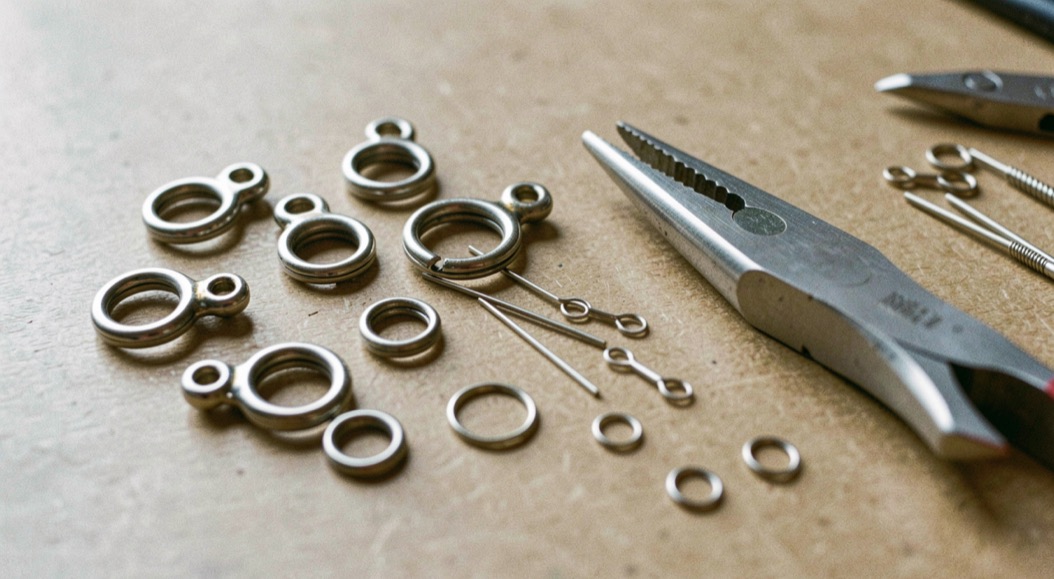
Start with the exact record, then match the hole, wire, crimp, jump ring, clasp, metal description, and finishing method as one junction.
Make
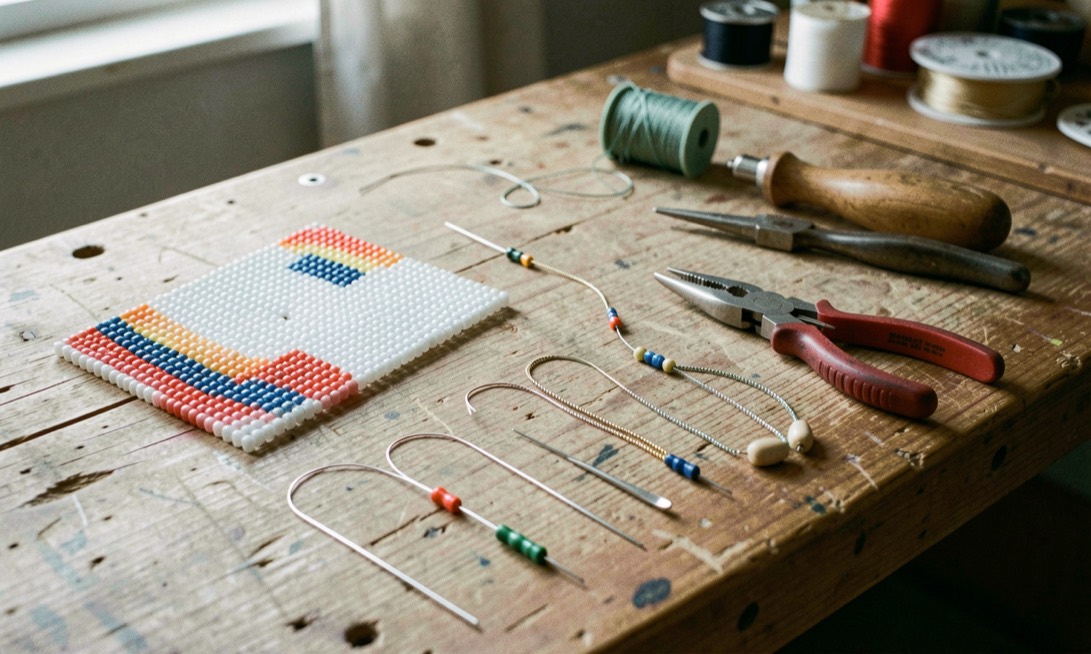
Start with the exact record, then learn one controlled movement at a time through short samples that reveal tool, material, and tension choices.
Make
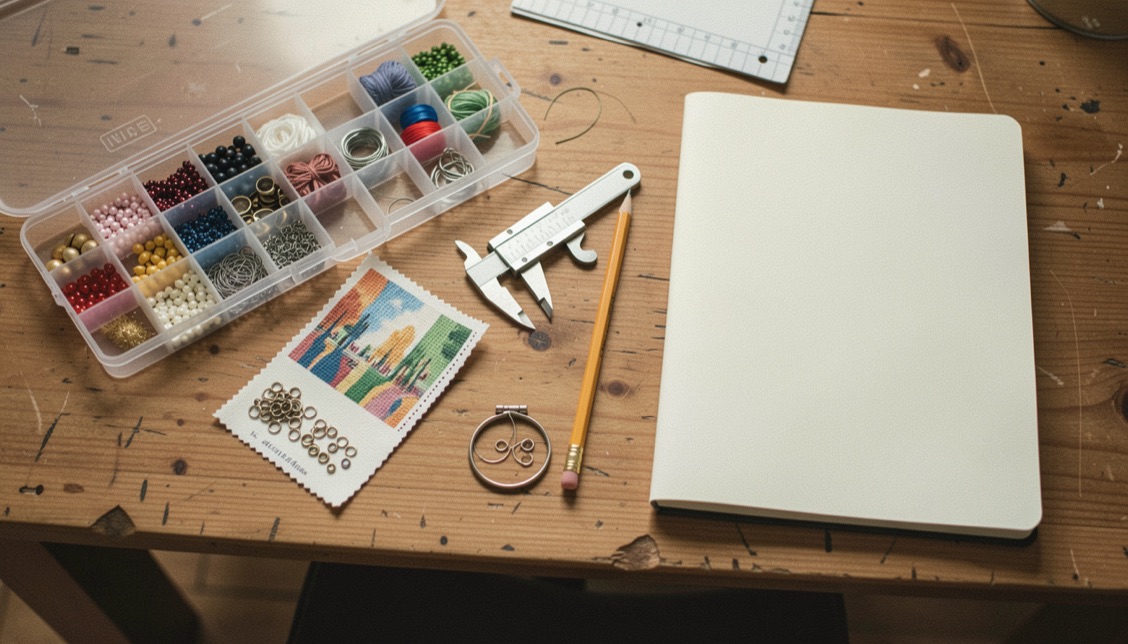
Start with the exact record, then plan from the limiting junction, then record the source and test that will decide whether the combination works.
Make
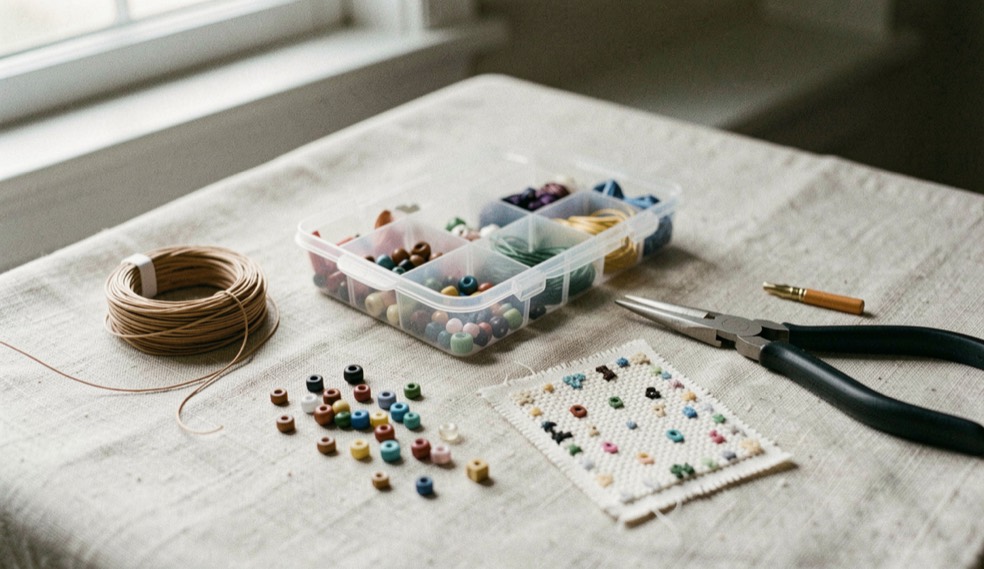
Start with the exact record, then substitute the structural job a bead performs, not only a familiar label or color.
Choose & Compare
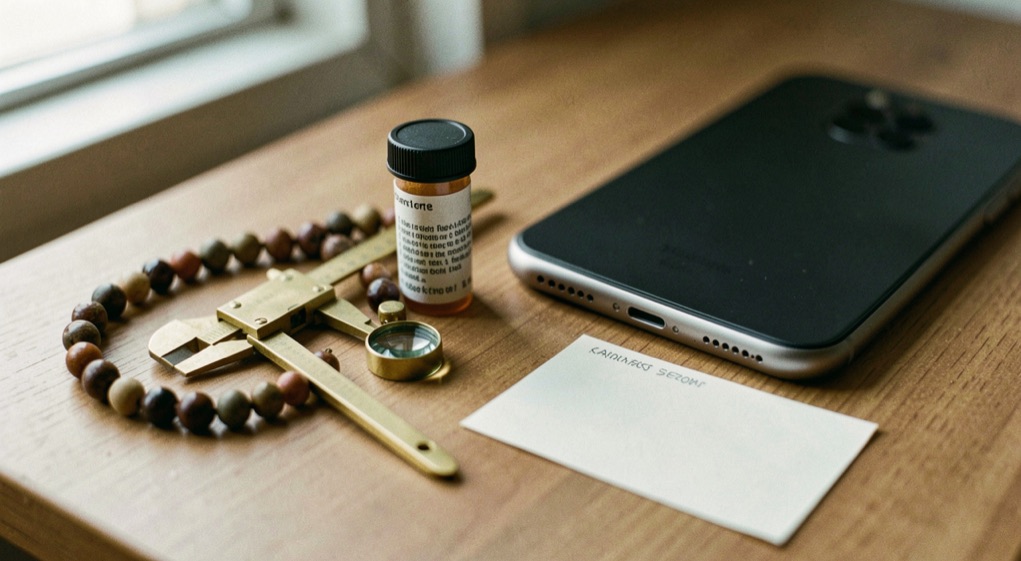
Start with the exact record, then read a listing as a material record with type, treatment, size, hole, quantity, finish, and the missing field made clear.

The Bench
Start with the exact record, then Reach organized primary sources by manufacturer, material, regulation, museum, conservation, and archive topic..

The Bench
Start with the exact record, then Browse dated updates and corrections after the initial publication phase..
Care & Keep
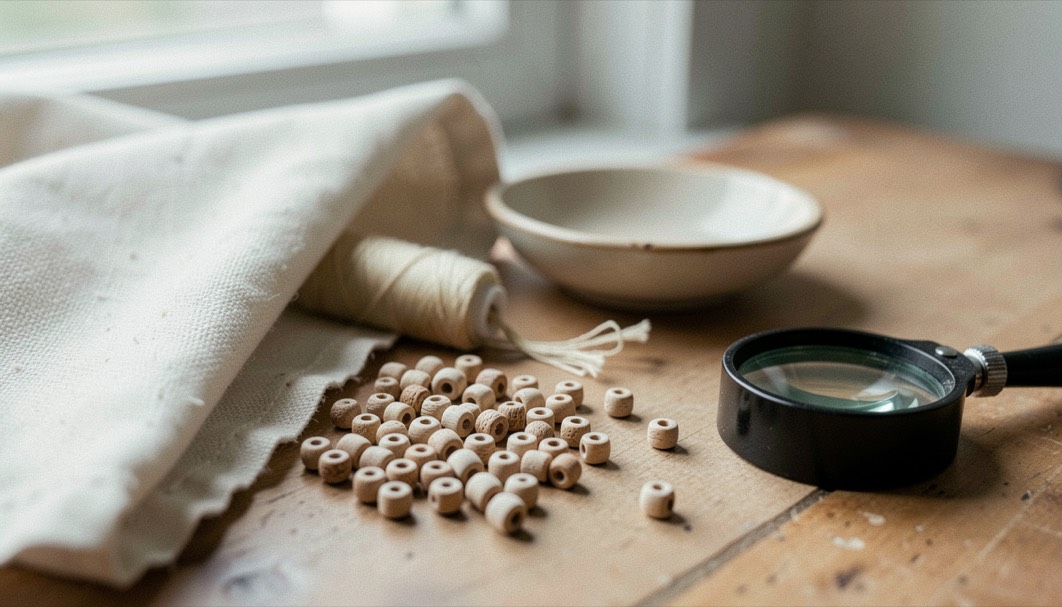
Start with the exact record, then translate manufacturer caution codes into the light, friction, skin, solvent, and wear conditions of the project.
Care & Keep
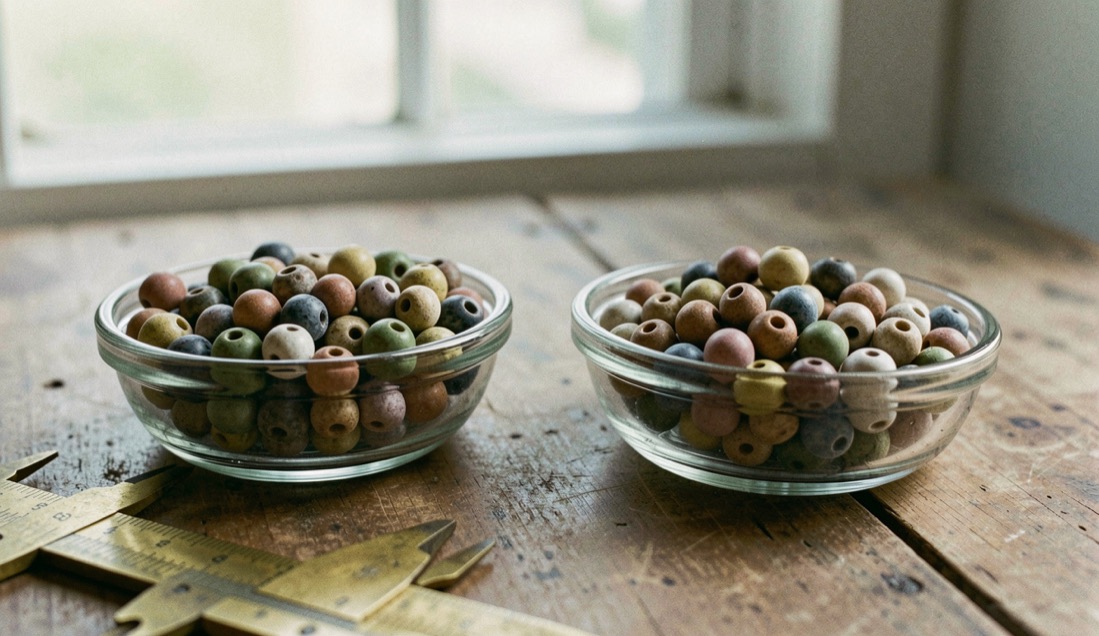
Start with the exact record, then treat a new lot as a new input and compare a short sample before mixing it into counted work.
Care & Keep
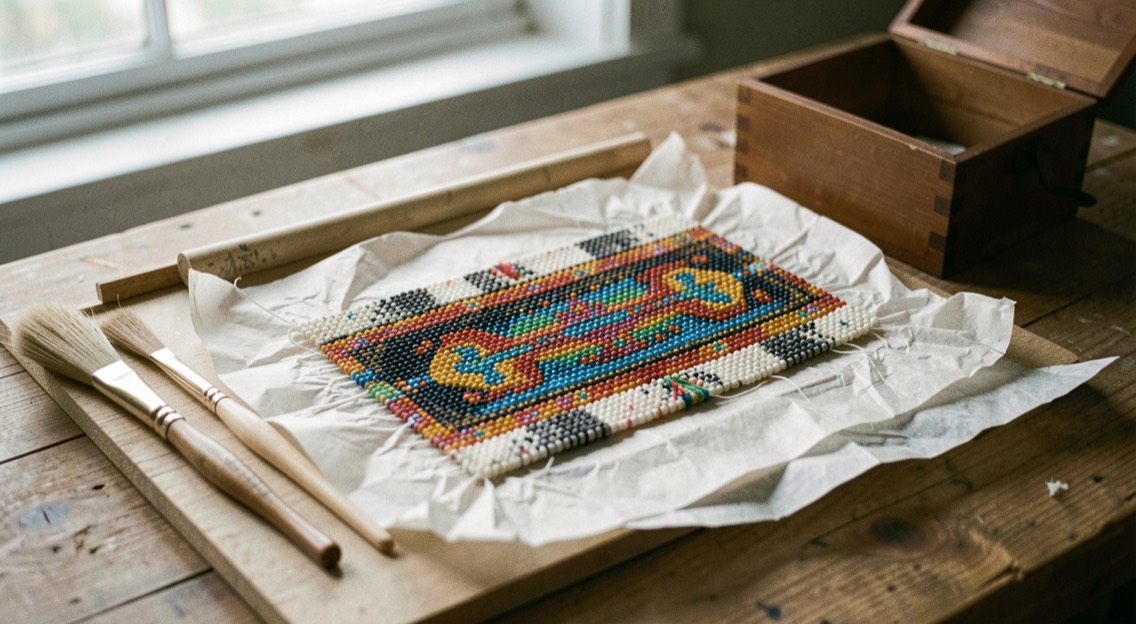
Start with the exact record, then support beaded work before moving or cleaning it, then reduce dust, light, heat, moisture, and hanging strain.

Materials
Start with the exact record, then treat species, moisture, drilling, and finish as the record behind a wooden bead.

Materials
Start with the exact record, then read leather cord as a material record of tannage, finish, thickness, and the junction it must accept.

Make
Start with the exact record, then match bead size, cord, and supervision to the child, then treat the worktable as part of the project.
Make
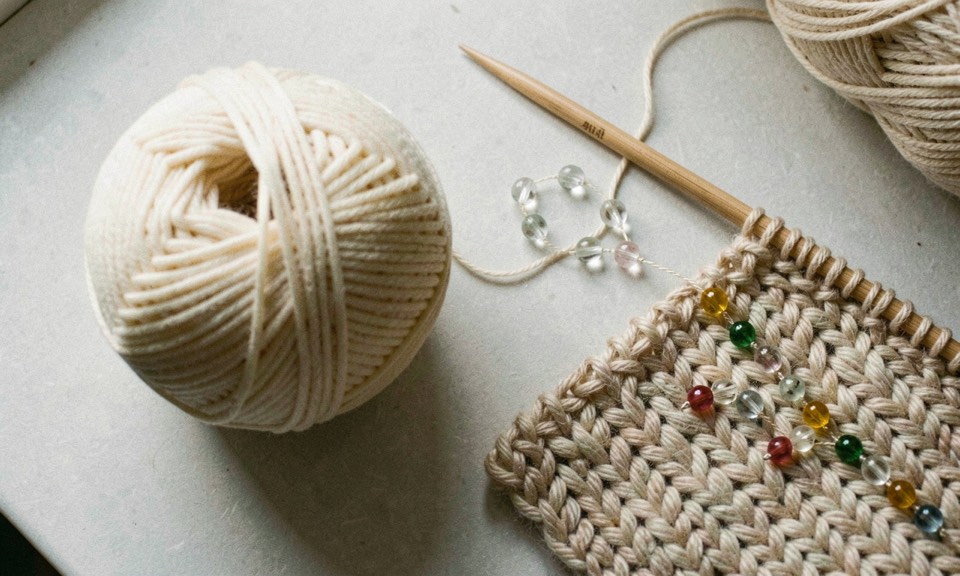
Start with the exact record, then match bead hole, weight, and finish to the yarn weight category, ply, and meterage before a single bead is strung.
Make
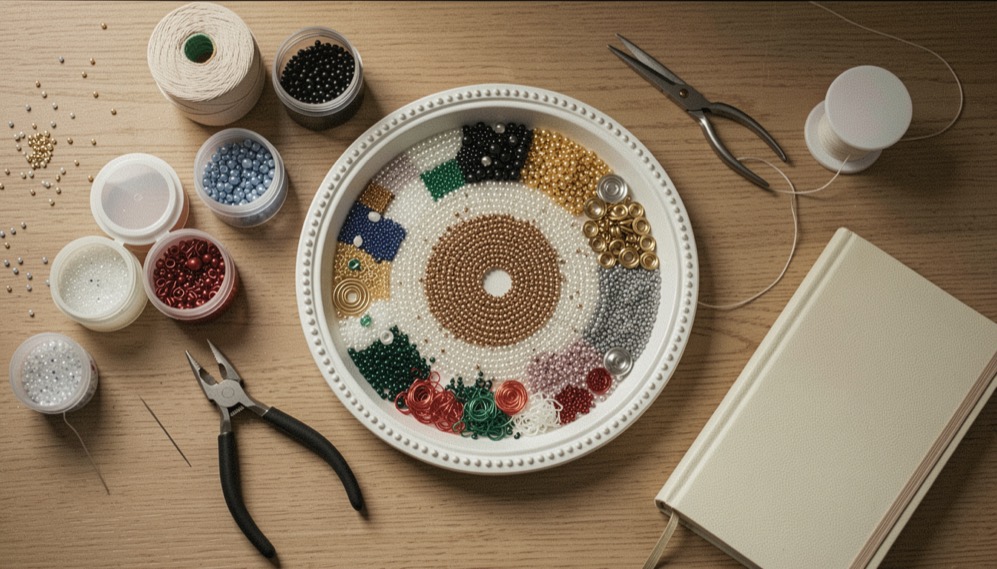
Start with the exact record, then buy only what a named step of the project requires, give the work a bounded zone, and keep the small reflexes that make a result repeatable.
Make
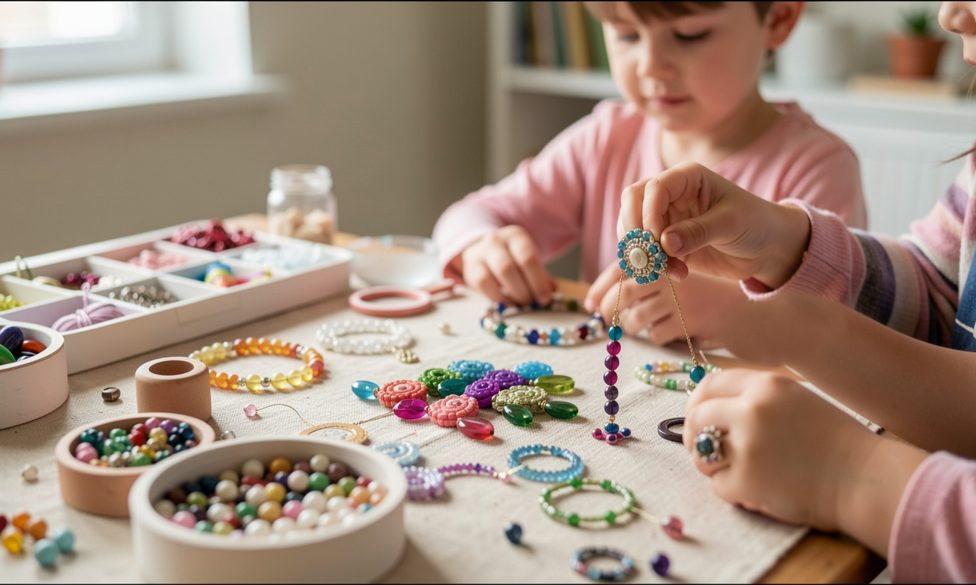
Start with the exact record, then Plan one short shared project from the cord and the bead hole, count the materials per person, keep each work place bounded, and close the session with a count-back..
Materials
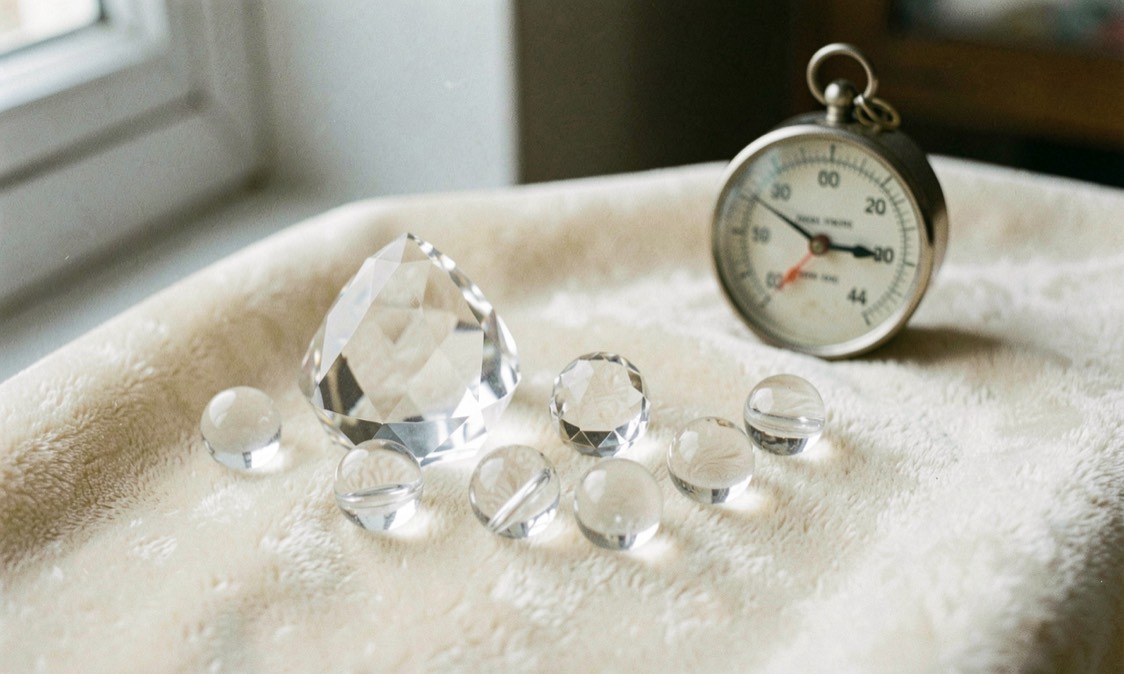
Start with the exact record, then Read transparency, finish, and lot before buying a color, test a short strand over the cord it will sit on, and hold the palette to three or four colors plus a neutral..
Make
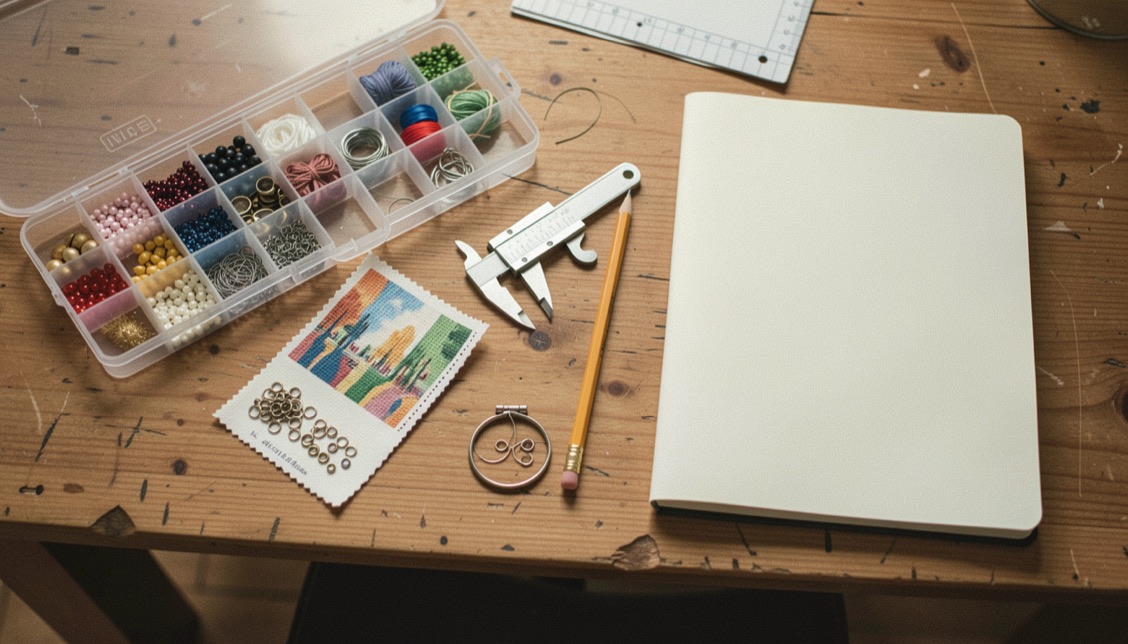
Start with the exact record, then choose the next piece from the trays already at the bench, then write the pick beside the date and the pattern name.
Materials
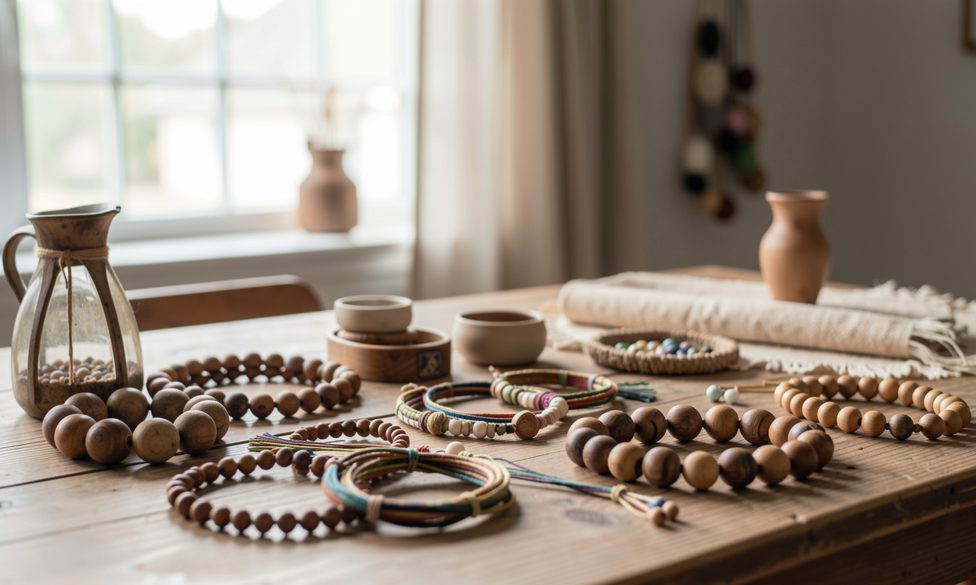
Start with the exact record, then read the wood record, add weight in small steps, and test the finish on a short strand before the full run.
Make
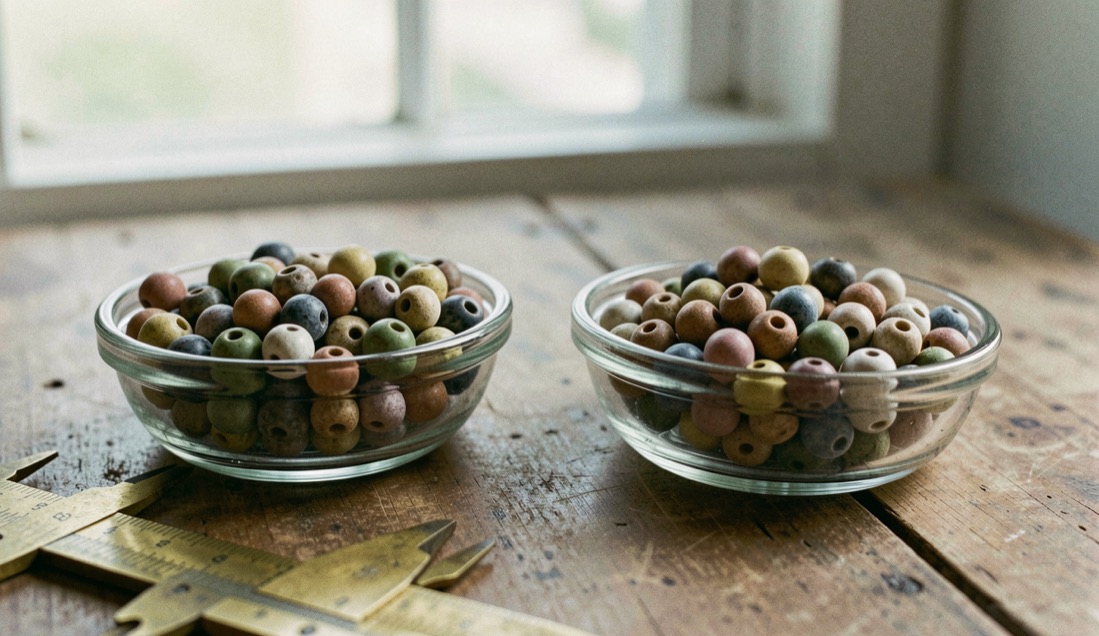
Start with the exact record, then weigh a counted sample, write the mass beside the lot, and check a stored bag before repeating a strand.
Make
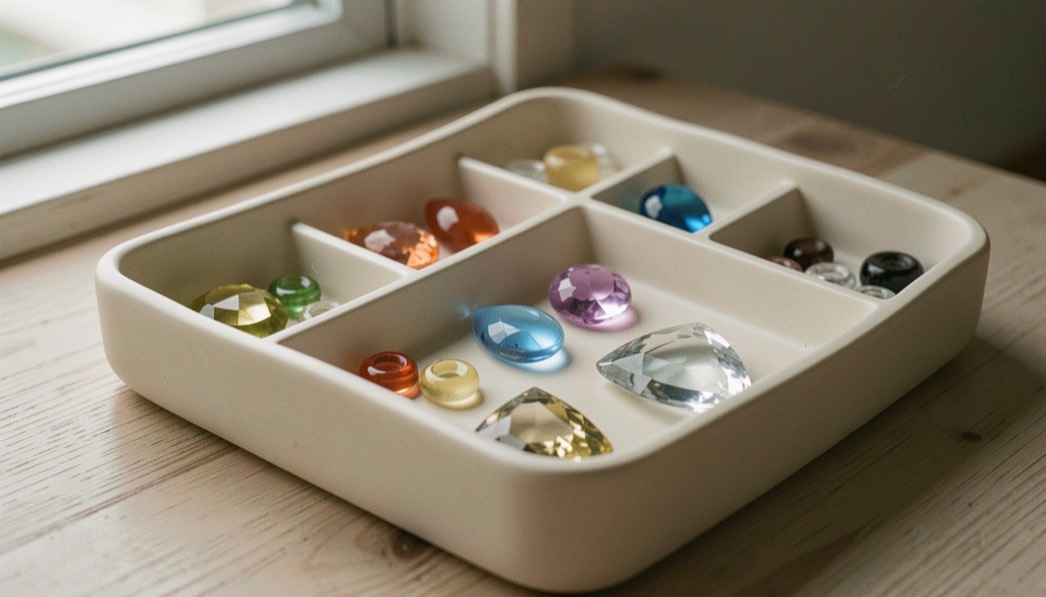
Start with the exact record, then give the short repeat a fixed count and a name, then write both beside the sample before teaching it.
Choose & Compare
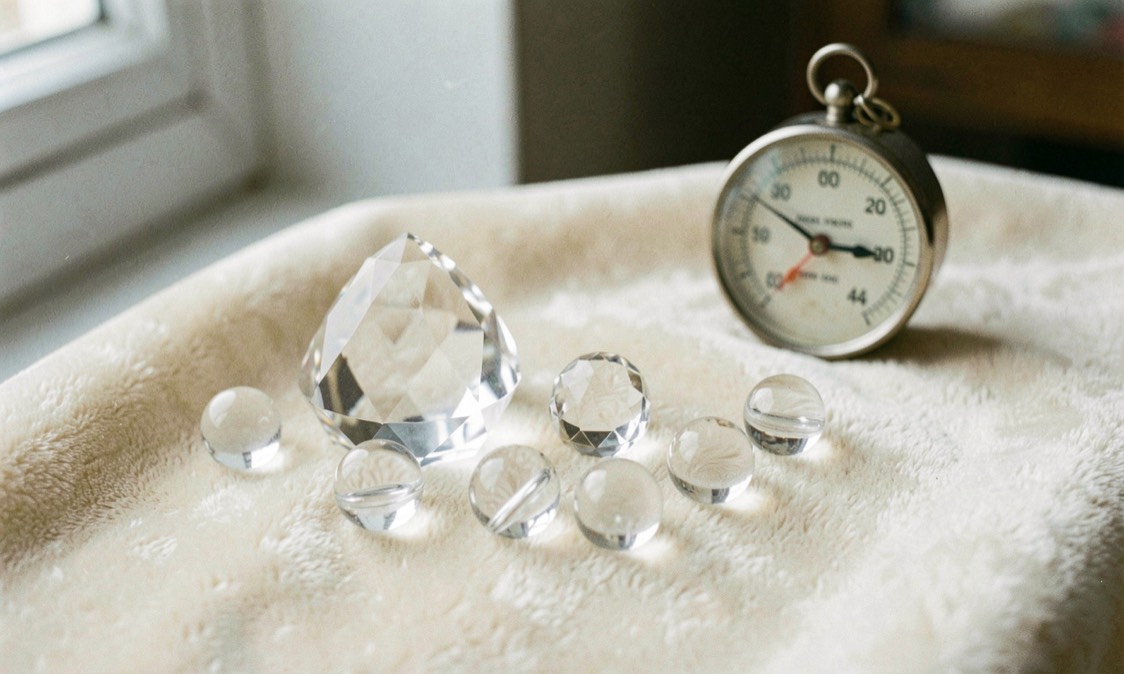
Start with the exact record, then string a short sample over the cord the piece will use, keep the finish and lot beside it, and price the piece from the work it takes.
Make
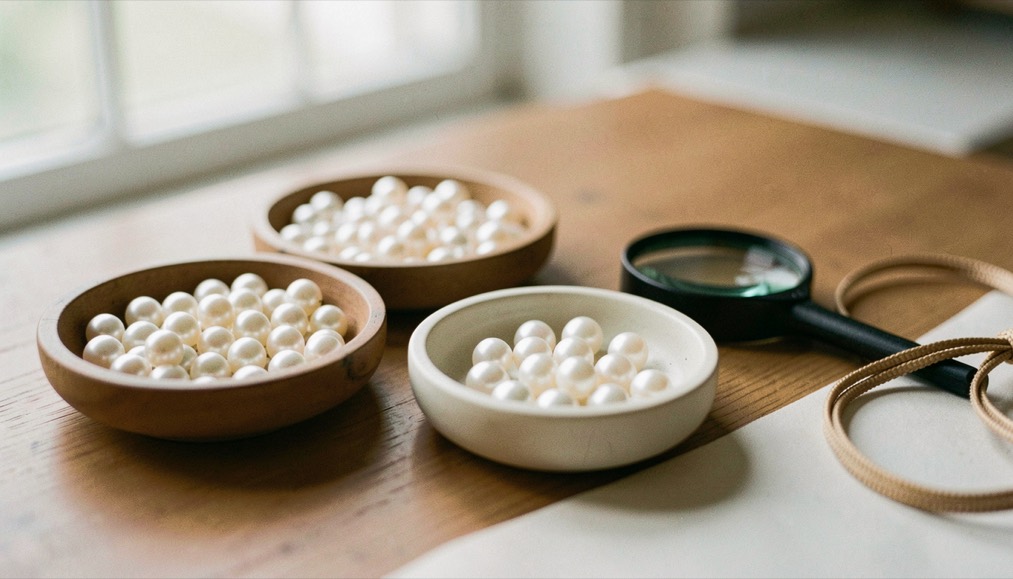
Start with the exact record, then read the timetable first, name the hands that will handle the piece, and run one rehearsal pass before the day.
The Bench
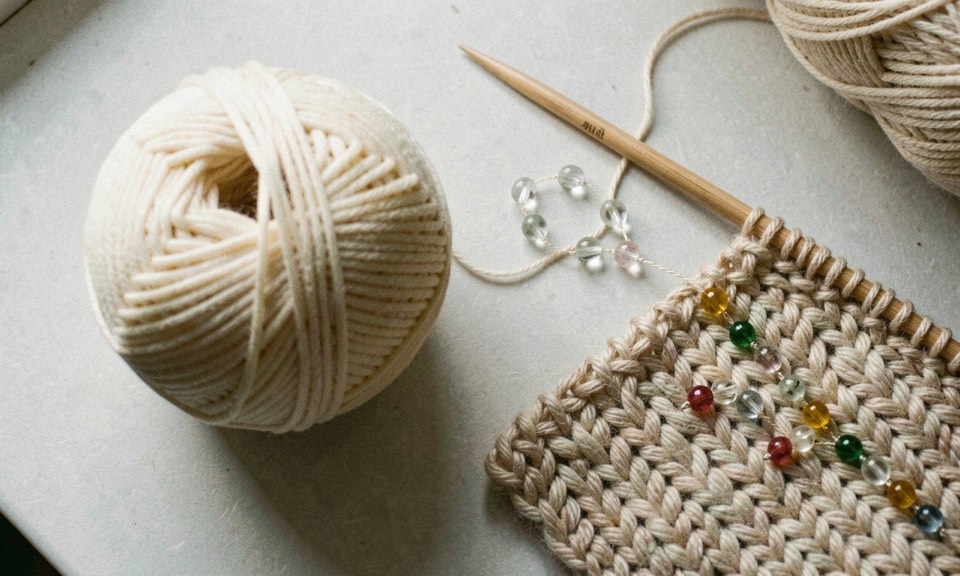
Start with the exact record, then write the material, count and date before the session, during it, and read the old record before the next attempt.
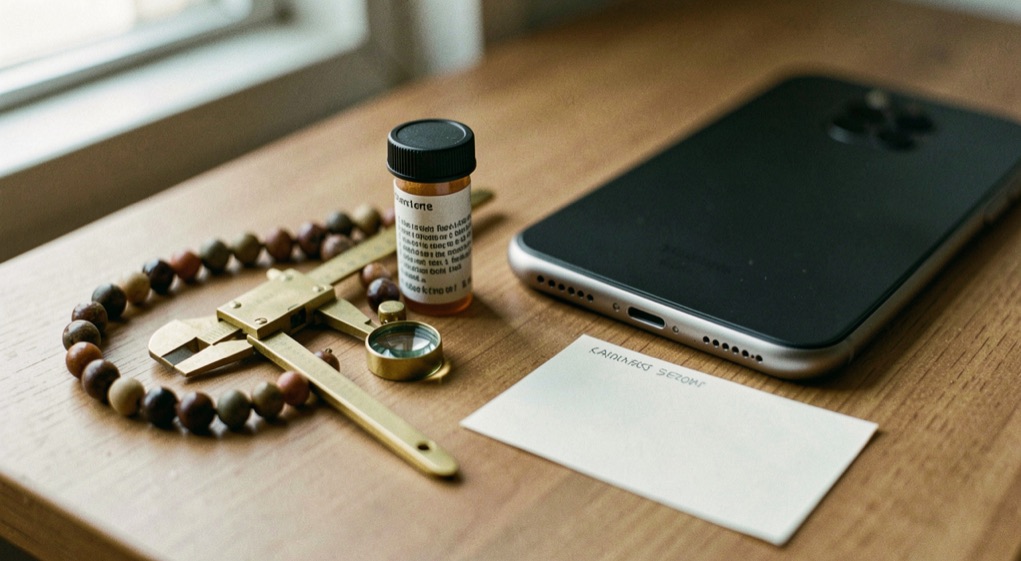
Choose & Compare
Start with the exact record, then count materials, losses and time for one piece, and weigh the odds that a second lot will not match before committing.
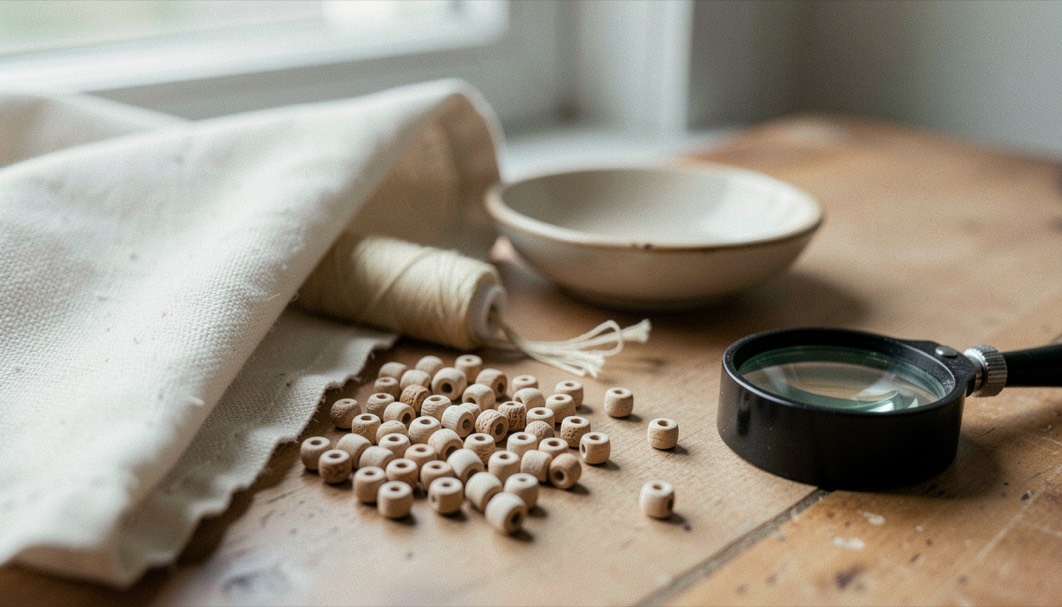
The Bench
Start with the exact record, then keep raw notes and a quick sketch of the strand, then let the next trial answer what the sheet left open.
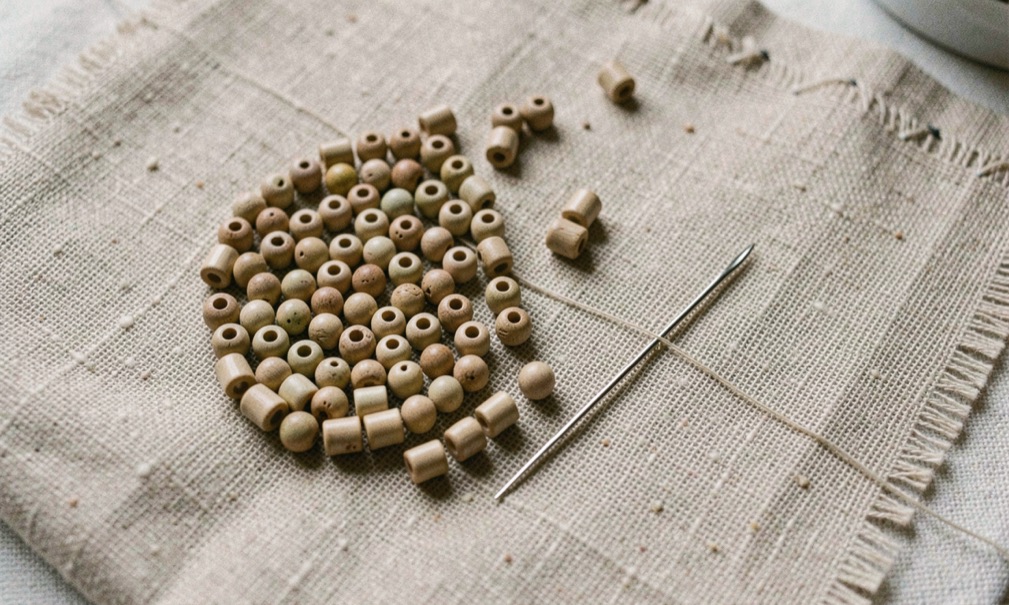
Choose & Compare
Start with the exact record, then check the strand in hand, ask the seller the short questions, and write down what a cash purchase leaves unknown.
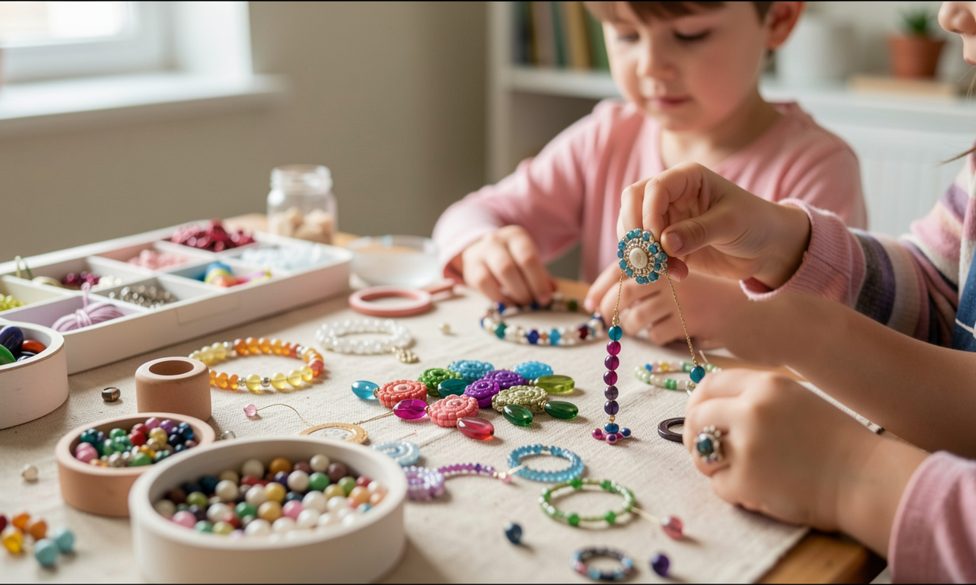
Make
Start with the exact record, then write the count and the round before the session, put both on one sheet, and test the format on one short strand.
The Bench
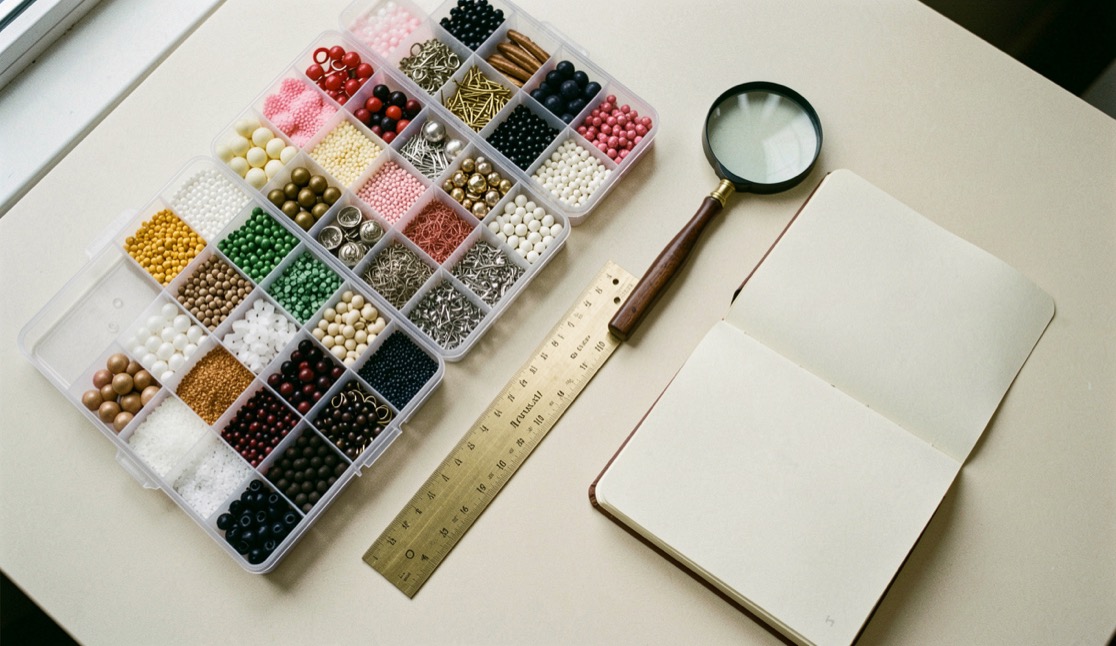
Start with the exact record, then sort a counting string by position and colour, then keep the count where a knock cannot move it.
Make
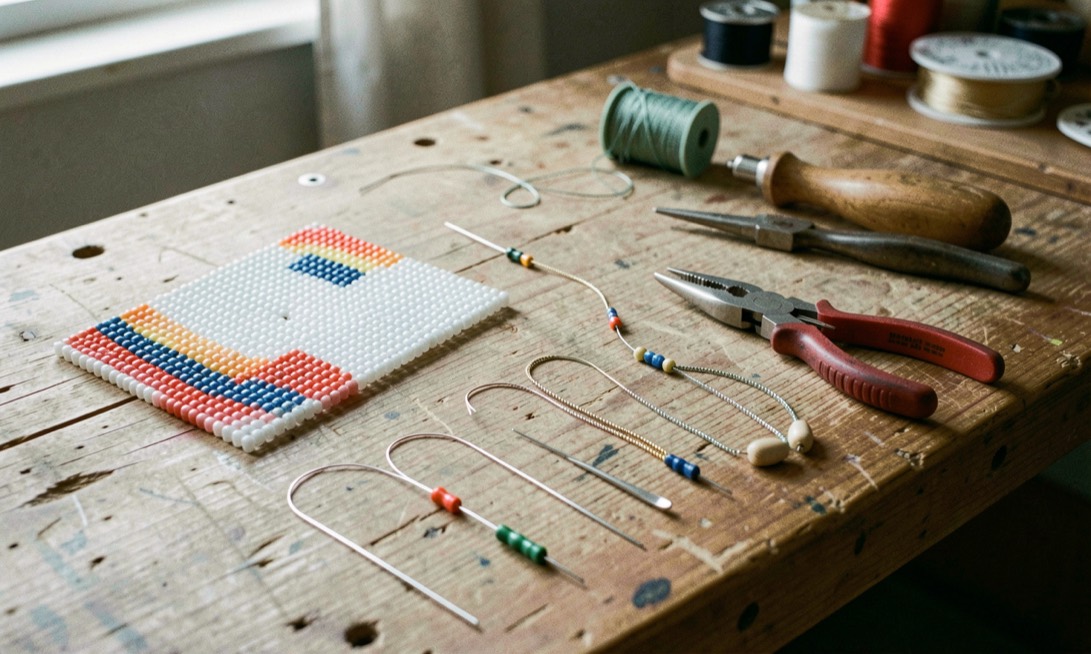
Start with the exact record, then name the counts, write the cue sheet, and practise the sequence slowly before working it in a full repeat.
Make
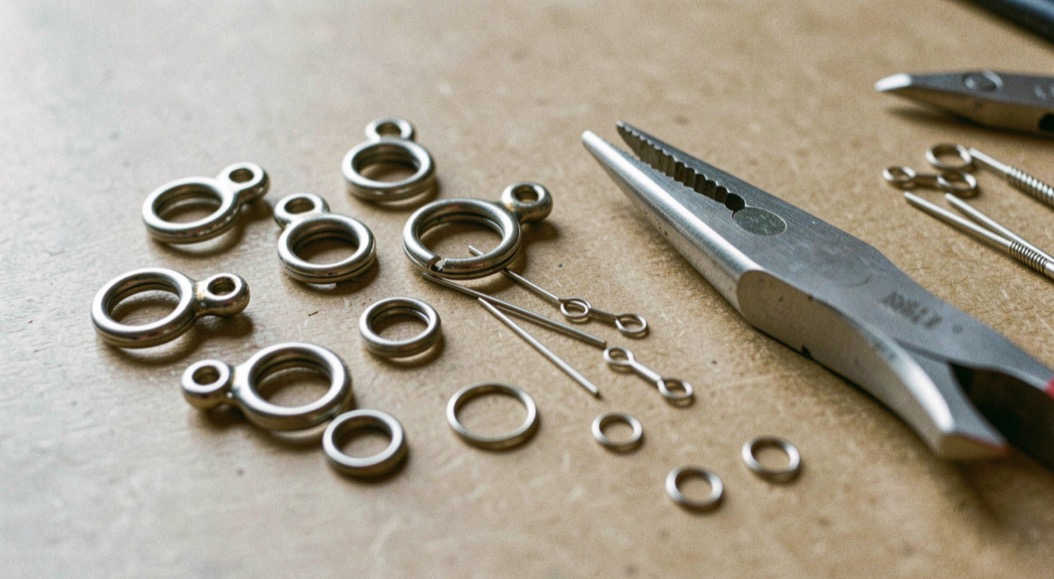
Start with the exact record, then declare the bead, the count per section, the order and the limits on one dated card kept with the sample.
Care & Keep
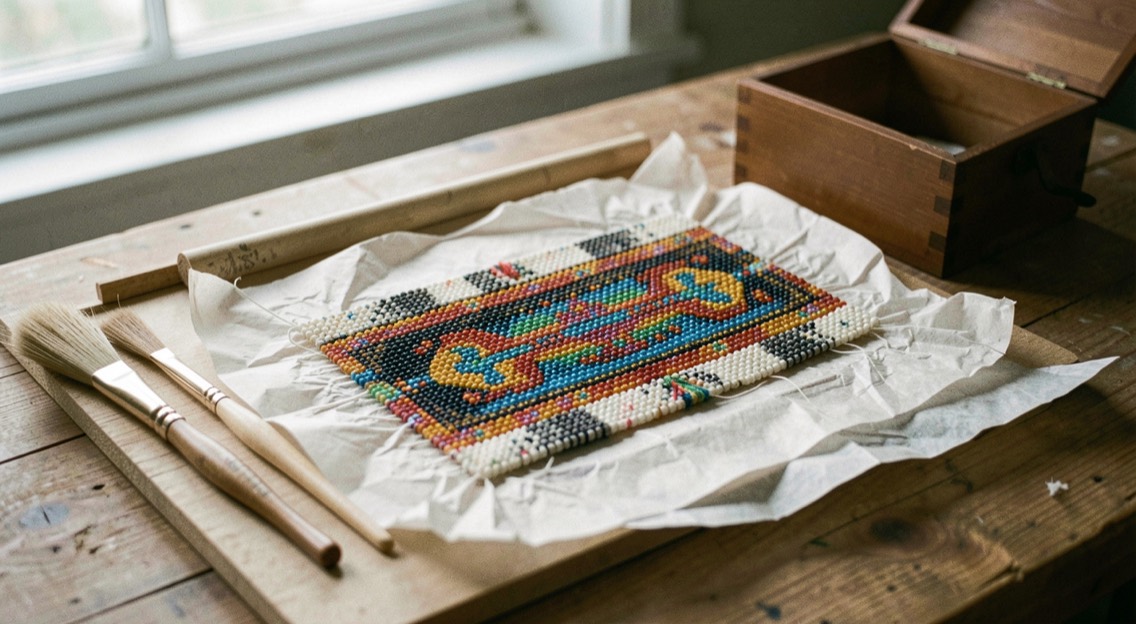
Start with the exact record, then choose the fixing by fabric and weight, place the piece before the day, and test the fixing before it is worn.

Choose & Compare
Start with the exact record, then re-read the listing, check the return window before the substitute, and record what the listing failed to declare.